Repairing original ceiling roses in period properties
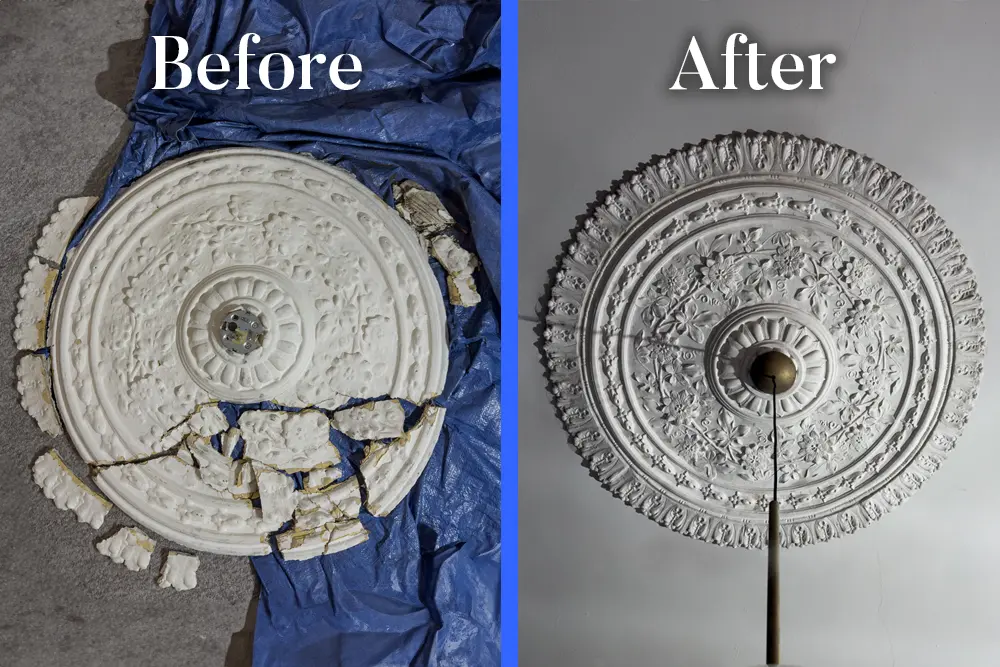
A damaged ceiling rose can make an otherwise well-preserved room feel unfinished. Cracked petals, broken edges, missing ornament, and poor earlier repairs are common, especially where lighting has been altered over time.
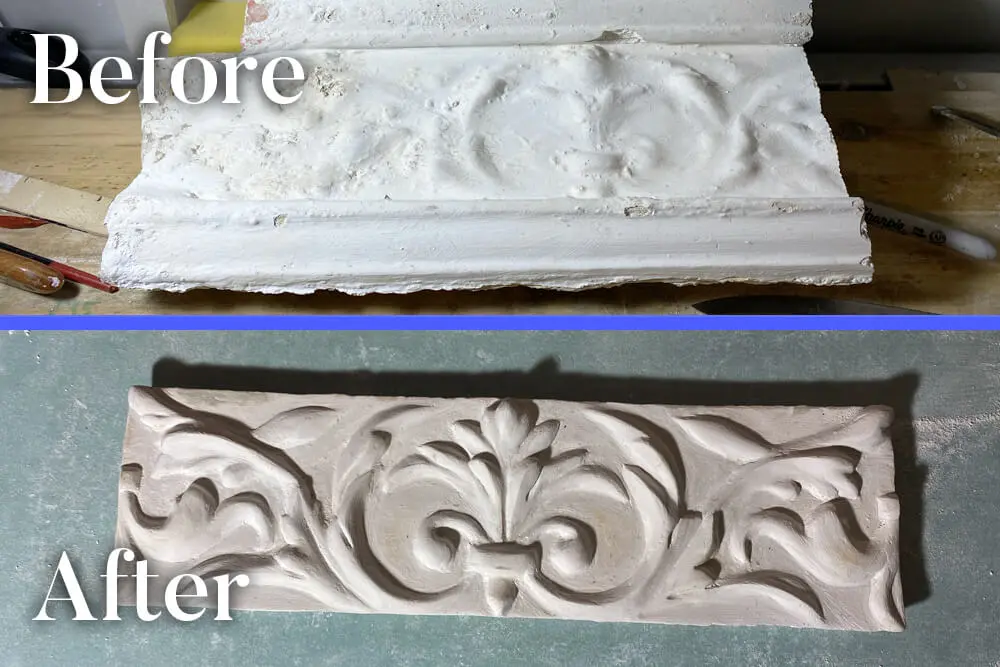
Where enough original detail survives, the best result is usually restoration rather than replacement. Broken ornament can be rebuilt, missing edges can be re-formed, and a new section can be cast from intact detail when the loss is too great for a simple repair. That keeps the design more faithful to the room and avoids the flat, generic look that comes with using an unrelated catalogue rose.
Water damage is a common cause of loss on ceiling roses, since they sit at the lowest point of the ceiling and catch staining or saturation from leaks above. Where the plaster is stained but still sound, cleaning and redecoration may be enough. Where water has softened the plaster or broken its key to the ceiling, the affected area needs to be carefully cut back, rebuilt, and blended so the repair doesn't stand out once painted.
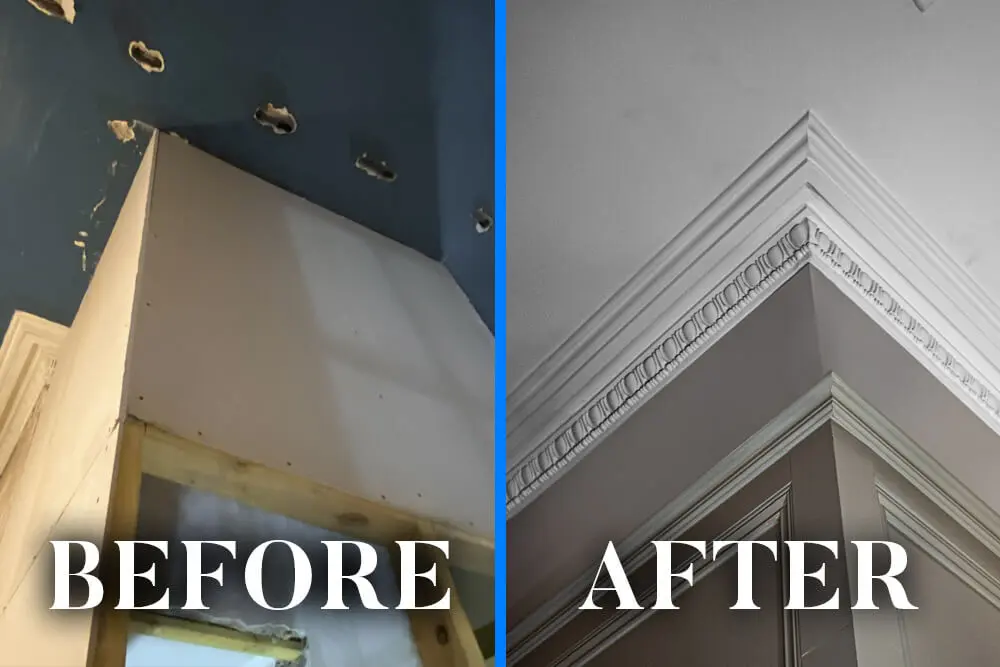
Ceiling roses in Victorian and Edwardian properties across Glasgow's tenements and townhouses were typically cast with sharper, more layered detail than a modern moulded substitute, so matching them properly means taking a template or mould from surviving ornament rather than fitting a generic replacement. Ceiling rose work is also closely linked to nearby cornice repair. If the rose, cornice, and ceiling line have all been affected by the same movement or previous works, it makes sense to treat the whole decorative scheme properly rather than patching one feature in isolation.