Ceiling Rose Restoration - Bringing a victorian feature back to life
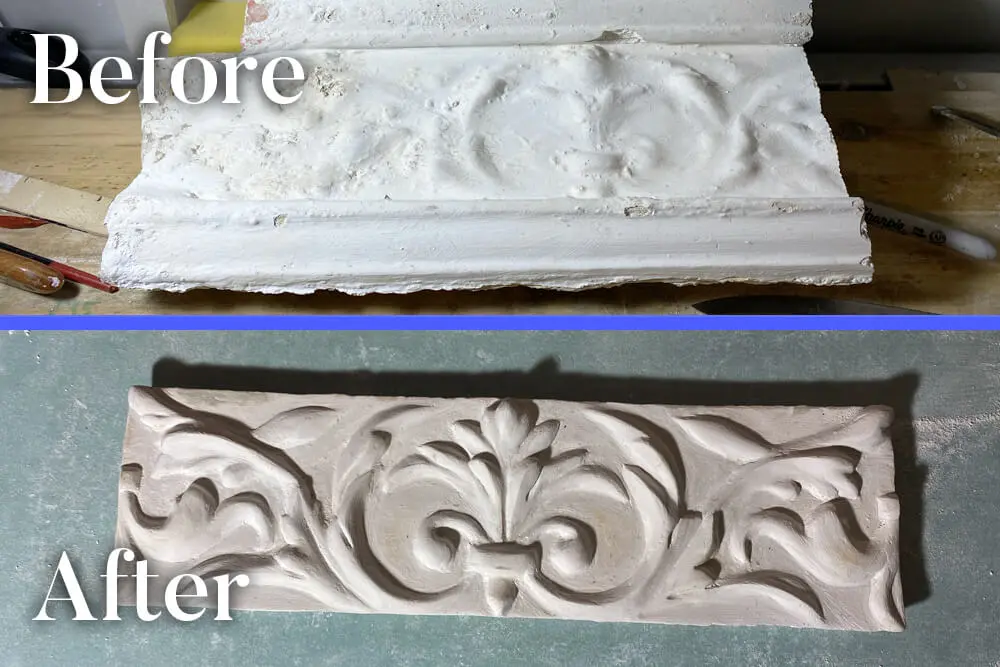
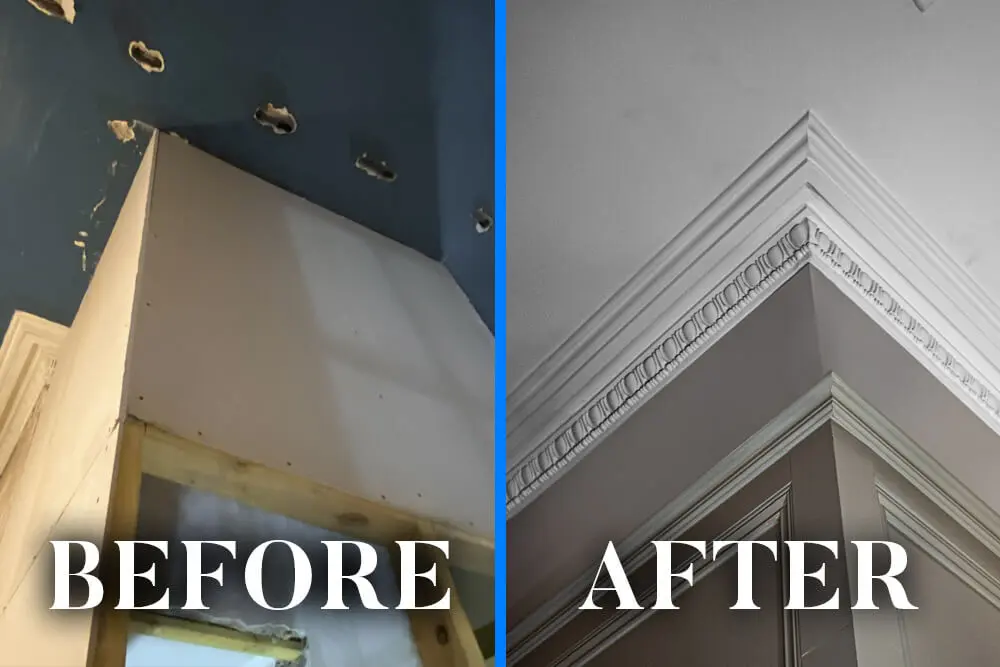
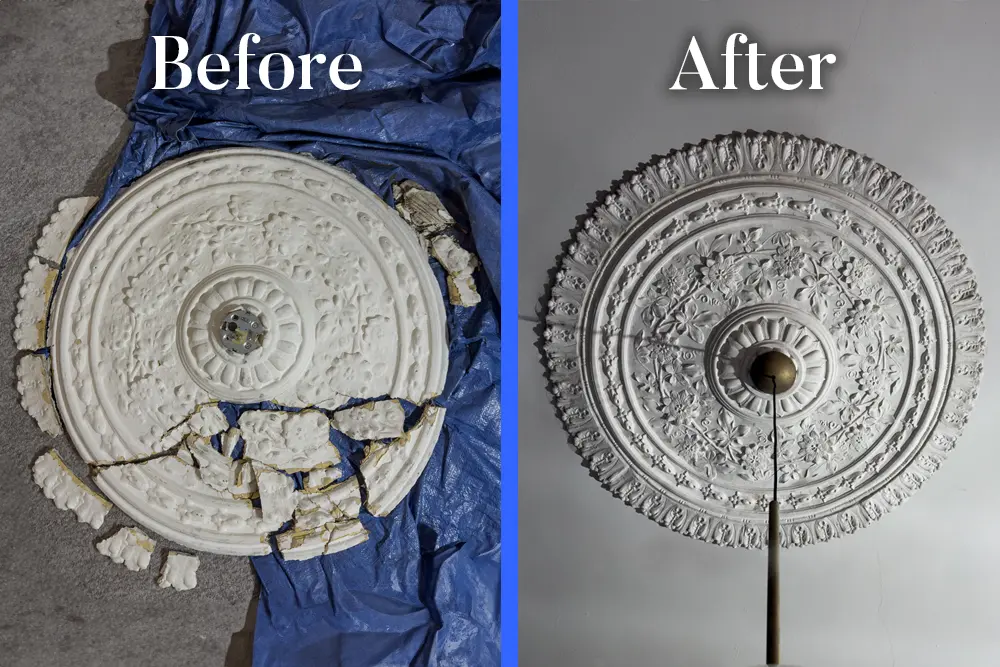
When a beautifully detailed Victorian ceiling rose fell and shattered, we stepped in to bring it back to life. Using careful resto...
Traditional interiors
Specialist restoration for damaged plaster ceilings, wall mouldings, cornices, and decorative features across Glasgow, with a strong focus on preserving original character rather than replacing it with generic modern substitutes.
Based in Glasgow
48 West George Street
Glasgow, G2 1BP
Useful for damaged plaster ceilings, water-affected ornament, missing decorative sections, and restoration-led repairs in older properties.
Plaster restoration is the umbrella under which all of our decorative plasterwork services sit: cornice repair, ceiling rose repair, ceiling replacement, and the broader ornamental plasterwork that doesn't fall neatly under any single one of those, such as wall mouldings, decorative panels, and other period features.
In period properties, the decorative plasterwork often forms part of the identity of the room. Once original detail is lost, it is difficult to get that character back with off-the-shelf replacements. Restoration work focuses on preserving what remains, accurately replicating what is missing, and making the whole scheme feel coherent again.
Where cornice, a ceiling rose, wall mouldings, and other ornamental detail have all been affected by the same damage, movement, or earlier low-quality work, it usually makes sense to assess and plan the restoration as a whole rather than treating each feature in isolation. Some projects are straightforward. Others need a more measured approach because the surviving detail is shallow, friable, or inconsistent from earlier interventions. Either way, the goal stays the same: return the room to a more convincing and durable state.
Beyond these, plaster restoration also covers wall mouldings, decorative panels, and other ornamental plasterwork not covered by a single service page above — send photos and we'll advise on the right approach.
Older plasterwork often fails first at joins, cracks, and corners. Repairs have to respect the shape of the original run so the eye is not drawn straight to the new section.
Central roses, perimeter detail, and decorative plaques are frequently damaged during rewiring or ceiling movement. Matching those features properly is part of good restoration practice.
Period interiors usually need a repair-first approach. Keeping original detail where possible is more appropriate than replacing it with standard catalogue profiles.
Not sure which service applies? Send us photos of the damage and we'll point you to the right approach.
Our process
A clear, recorded process from first survey to handover — suited to period homes, tenements, listed buildings, and the documentation increasingly expected under Scotland's guidance on traditional buildings.
01
We assess the condition of the plasterwork in its context — the surrounding fabric, any signs of movement, and the likely cause of damage — and photograph everything before work begins.
02
Where detail is missing, we take a profile or mould from a sound surviving section so replacement runs reproduce the original design rather than a generic off-the-shelf profile.
03
We select materials to work with the building, not against it — including lime-based, breathable plasters where the original construction calls for them, rather than sealing historic fabric behind incompatible modern coatings.
04
As damaged sections are opened up, we record what is found — hidden voids, earlier repairs, and structural notes — which is exactly the information conservation officers and building-warrant records tend to ask for.
05
New sections are cast and fitted to sit naturally alongside the surviving detail, with joints and runs matched so repairs are not obvious once finished.
06
On completion you receive before, during, and after photographs, a note of the materials used, and a record of the repairs carried out — a useful record for owners, architects, and conservation approvals.
Note: where damp or structural problems are present, plaster repair alone is not a cure. We work alongside surveyors and conservation architects so the underlying cause is addressed first.
FAQ
Send over your photos and we can advise whether the damaged plasterwork can be restored, matched, or needs a replacement section cast.